
Seeing Anew, Embracing the World
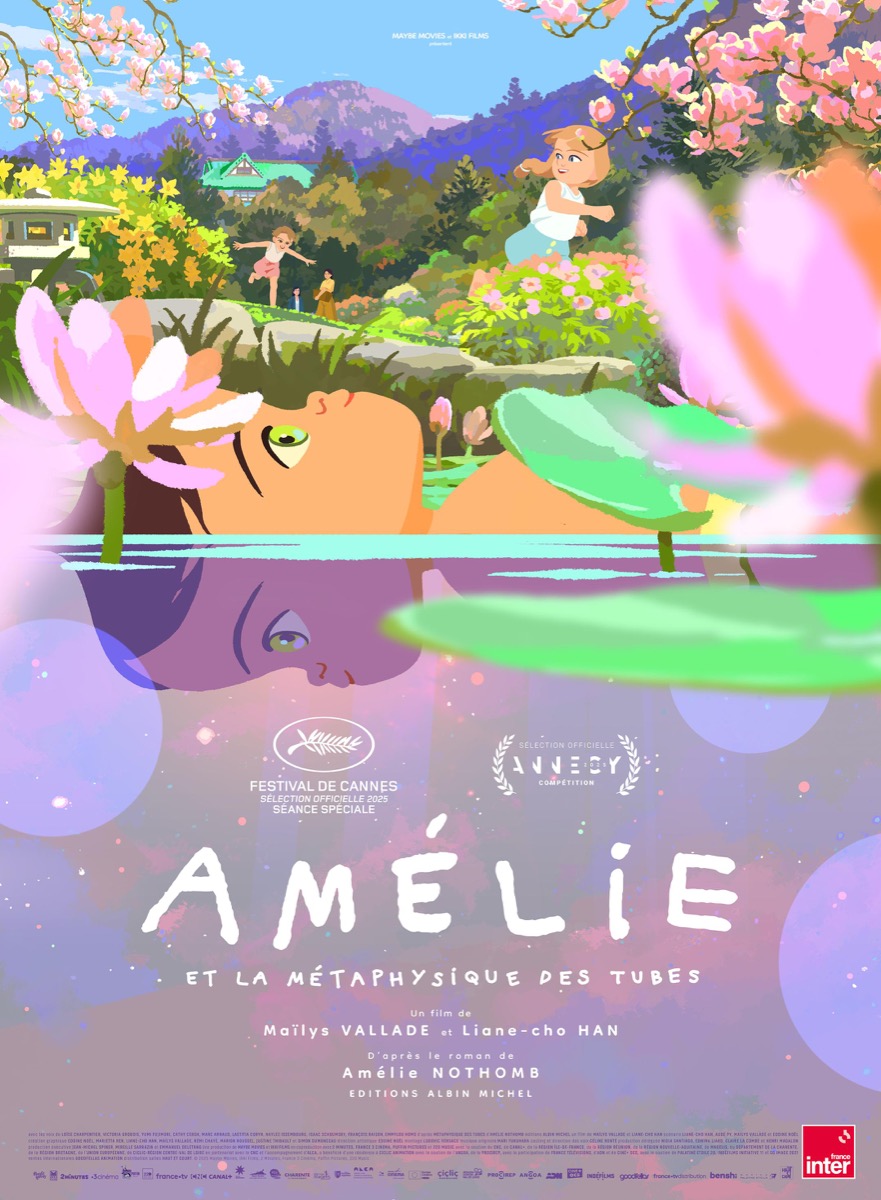
If life is an adventure, do you still remember the moment you first fell in love with the world?
The animated feature Amélie and the Metaphysics of Tubes takes us back to that initial spark through a child’s perspective and a gentle look back at life. Adapted from Belgian author Amélie Nothomb’s semi-autobiographical novel The Character of Rain (Métaphysique des tubes), the film brings a fantastical journey of senses and spirit to the screen.
Co-directed by Maïlys Vallade and Liane-Cho Han, the film invites audiences to feel the world all over again through the eyes of young Amélie. This sensory journey begins with a striking visual impact.
The filmmakers cleverly construct a fairytale universe painted in pastel, watercolor tones—soft pinks, muted purples, and mint greens. These vibrant, dreamlike colors are more than pretty visuals; they represent the foundation of Amélie’s world. They serve as her visual tool to process life and death, face farewells, and navigate heavy collective trauma. Sidestepping adult preaching, the film adopts a lightweight, childlike view that gently leads us to touch the beauty of nature.
Within this vibrant world of color, Amélie learns to feel the rain fall and touch the blossoming flowers. Her growth does not follow a rigid linear narrative; instead, it is marked by three symbolic “births.”
The first birth is her physical arrival into the world—falling from the womb as a living being passively beginning her journey on Earth.
The second birth is the film’s most captivating visual moment: eating a piece of white chocolate. Through abstract and vibrant imagery, the film captures the exact moment her senses suddenly awaken. Triggered by taste, Amélie truly begins to interact with the outside world and steps into being “seen.” Guided by Nishio-san, she moves beyond mere physical existence, discovering her true self through this sensory awakening.
Yet, growth rarely comes without pain. As life teaches us to feel, it inevitably brings loss and separation.
Nishio-san teaches her to listen to the wind, feel the rain, and embrace the light; meanwhile, her grandmother’s quiet passing leaves behind a void of grief. It is precisely within this natural pain that Amélie reshapes who she is.
Her third birth comes right after experiencing this loss and heartbreak.
Having faced life’s cracks and flaws, she still chooses to love living. This choice is no longer the naive wonder of her first days; it is a quiet, adult form of courage. After enduring the inevitable growing pains, she retains the heart to feel, experience, and truly live—crossing through years of hardship to embrace life once more.
This is not just an animated film for children; it is a love letter to the hearts of adults.
The world may be full of disappointment and setbacks, but like Amélie, we can choose to see it anew. Through her three births and farewells, we might just reconnect with that initial spark when we first fell in love with the world—and with ourselves. To feel the world all over again and embrace life: perhaps that is the ultimate way forward.