
Deeply Invested, Deeply Moved
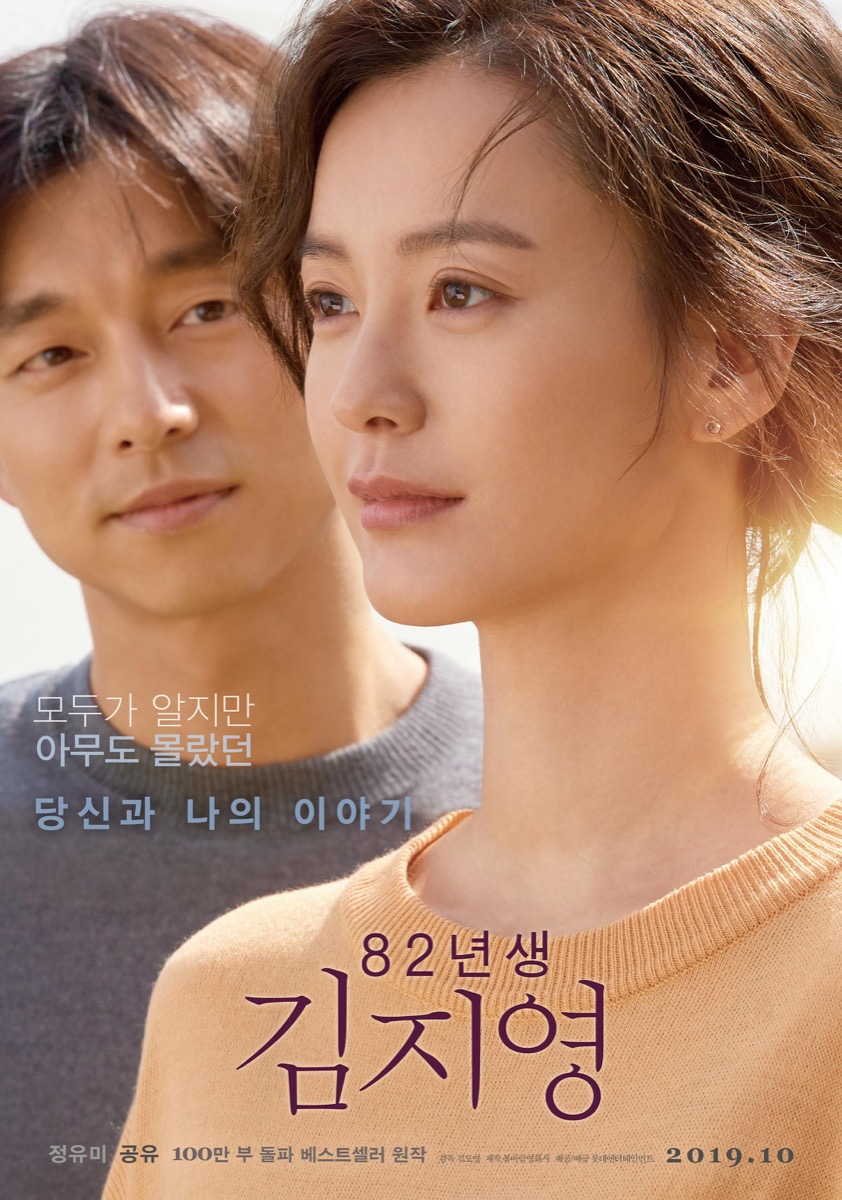
In its transition from literature to cinema, Kim Ji-young, Born 1982 preserves much of the emotional texture of the original novel while also supplementing its restrained narrative approach with the expressive possibilities of film.
When reading the novel, the author’s particular linguistic style can, to some extent, make the characters and situations feel less fully realized in concrete terms. Yet the text itself possesses a strong visual quality. The film adaptation brings this latent visual dimension into greater focus through performance, mise-en-scène, and audiovisual language. In doing so, it neither distances itself entirely from the narrative and emotional logic of the novel nor simply reproduces the literary text scene by scene. Instead, it establishes a relatively organic transition between the two mediums.
This approach also allows viewers to establish different degrees of connection between the protagonist’s experience and their own. Kim Ji-young’s story belongs to a specific individual, but it also carries a certain universality. The film therefore offers multiple points of entry: viewers can approach the story through the protagonist’s circumstances, while also relating them to their own experiences, those of women around them, or the broader social conditions faced by women as a group.
The film’s treatment of the characters and their relationships, however, represents a notable departure from the novel. Compared with the relatively restrained treatment of male characters in the book, the film gives Kim Ji-young’s husband considerably more screen time and narrative function, while his understanding, concern, and support for his wife are also given greater prominence. As a result, the husband is no longer merely a functional character whose actions help shape the protagonist’s circumstances, but becomes a more fully developed figure in his own right. At the same time, this adjustment shifts the narrative balance between the male and female characters established in the original text.
From the perspective of the novel’s narrative strategy, the male characters are largely situated within the framework of the protagonist’s development and social circumstances, and their roles are comparatively functional. The film, by contrast, gives the husband a greater narrative presence, thereby introducing additional complexity into the relationships between the characters.
On the one hand, this prevents the film from reducing its characters to simple categories of “victim” and “perpetrator,” allowing the husband to embody more of the contradictions and complexities of everyday life. On the other hand, this adjustment may also, to some extent, dilute the novel’s concentrated focus on structural gender inequality.
The expansion of the husband’s role can therefore be understood both as an attempt to render interpersonal relationships more multidimensional through the cinematic medium and as an adaptation choice that invites further discussion. When the source novel places greater emphasis on the relationship between women’s individual experiences and the social structures surrounding them, to what extent does the film need to give male characters greater opportunities for empathy, reflection, and emotional expression in order to construct a more dramatically compelling family dynamic? Whether this ultimately enriches the characters or, instead, partially disperses the critical focus of the original remains open to interpretation.
The film’s selection and adaptation of key scenes from the novel is also particularly effective. Rather than attempting a comprehensive, scene-by-scene reproduction of the source material, the film selects representative episodes for cinematic treatment, drawing on the strengths of performance, spatial composition, and audiovisual expression to compensate for the relative flatness of the novel’s narrative form. In the process, the psychological experiences of its characters and the social realities they inhabit acquire a more concrete visual presence.
The performances further reinforce this quality. Jung Yu-mi, as Kim Ji-young, and Kim Mi-kyung, as her mother, both give nuanced portrayals of their characters’ emotional lives. Jung Yu-mi’s performance is particularly effective in conveying Kim Ji-young’s different psychological stages. Rather than relying on overtly dramatic expression, she uses subtle shifts in facial expression, vocal delivery, and physical demeanor to convey the gradual transformation of the character’s emotional state. This restrained approach gives Kim Ji-young’s psychological development a clear sense of progression and allows the audience to engage more closely with her circumstances.
The film’s closing sequence, which establishes an echo with the original novel, is also noteworthy. Rather than severing itself entirely from its source, the film re-establishes a connection with the novel at the end, bringing the personal story it has unfolded back into dialogue with the broader social and gender issues at the heart of the original work. In this way, the ending brings the film’s own narrative to a close while retaining something of the openness and resonance of the literary text.
Overall, Kim Ji-young, Born 1982 is not simply a visual reproduction of its source material. While retaining its central characters and thematic concerns, the adaptation reorganizes its character relationships, narrative pacing, and modes of emotional expression. It inevitably reflects the compromises inherent in literary adaptation, but it also makes use of the cinematic medium to give the social experiences explored by the novel a more tangible emotional and visual form.