
“The Roses” Who “Stole” Human Rights from the Fractures of Patriarchy
“Those 'Roses' who 'stole' human rights from the fractures of systemic oppression were never prophetic gender revolutionaries. They were merely ordinary people in a harsh era, forced to don male armor just to survive as human beings.”
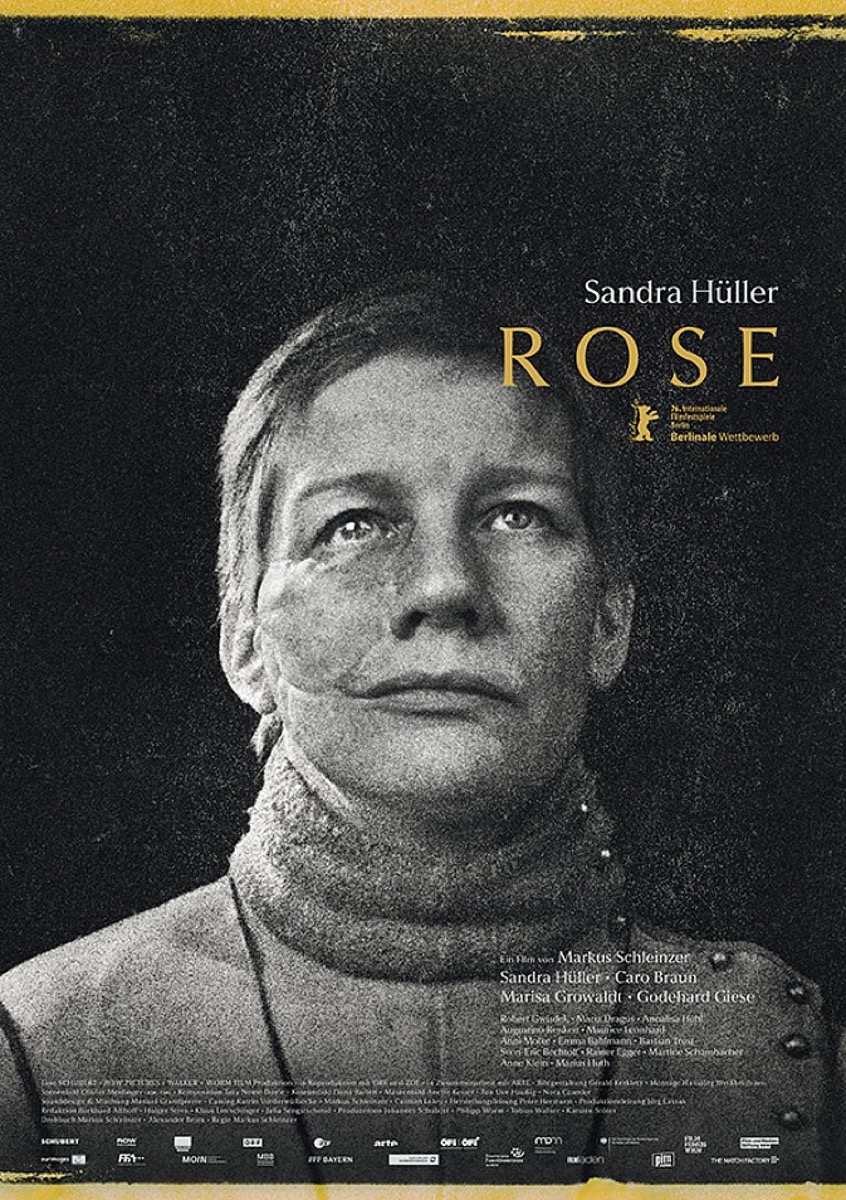
Before watching Rose—the award-winning film at this year’s Berlin International Film Festival—one might assume the title character is a textbook feminist heroine. Yet as the screen unfolds, what we witness is not an awakening of gender consciousness, but a desperate, brutal bid for individual survival and basic human rights.
The film opens with the camera anchored on Rose’s back—showing a figure standing to urinate like a man. It is only when her companion glimpses the act and walks away that this striking opening establishes its metaphor: within a tumultuous order, a female body achieves safety and immunity only when validated by such “male behavior.”
Drawing from historical fragments of 17th-century Europe during the Thirty Years’ War, the film exposes an era when harsh legal and religious doctrines stripped women of independent inheritance and basic human rights. To escape tyranny, poverty, and forced marriage, women cut their hair, bound their bodies in rough military coats, and exiled themselves onto the battlefield. Rose was merely one of many.
The film’s true tension builds when Rose sheds her uniform, disguises herself as an heir, and steps into a quiet village.
There, she begins a satirical simulation of being a “good man.” She inherits land, provides work for impoverished villagers, drives away a threatening bear, and even marries to expand her property. When a child’s cry breaks the silence, Rose achieves success in the conventional sense—she becomes the village’s “trustworthy good man.”
Yet dignity built on disguise remains fragile. The night her identity is accidentally exposed, the villagers who once respected her surround her house with torches. Men flaunt their phalluses as a threat, while women stand on moral high ground to condemn her “immodesty.” This siege rips away the hypocritical mask of patriarchal civilization.
Even though she flees with her “wife,” they cannot escape the law’s grasp. The “wife” is sentenced to death; Rose is also sentenced to die, but her execution is delayed because she is pregnant—the life in her womb becoming the sole reason the judicial authority spares her temporarily. As for who the father is or where the child ends up, those mysteries dissolve into the judge’s icy words. Rose ultimately becomes a casualty of a hyper-patriarchal society—a woman denied even the “gift” of life itself.
“Gifted” serves as the text’s central anchor.
In the courtroom scene, faced with the judge’s condescending question—“Who gave you the freedom to be a man?”—Rose replies: “I gave it to myself.”
When pressed on why she disguised herself as a man, she answers calmly: “Because I felt more comfortable wearing pants.”
That moment hits with profound force. Rose’s actions do not stem from a grand ideological urge to end gender oppression or dismantle an absurd patriarchal order. She wears pants not to declare a political right for women to wear them, but simply because “they are more comfortable.” She fights for land and status not to challenge laws that restrict property to men, but because, as an individual, she simply wants to live with dignity.
Strictly speaking, Rose does not fit the traditional definition of a feminist.
Feminism often emphasizes the awareness, critique, and collective resistance against systemic gender inequality (hooks, 2000)[1]. Rose’s cross-dressing and concealment are, at their core, an individualized survival strategy. You see no ideological banners raised above her head; you see only an ordinary person instinctively grasping at basic human rights—freedom, property, safety, and survival—under extreme oppression.
She is not a prophetic gender revolutionary, but an ordinary person forced to “steal human rights” from the fractures of an unequal world. When she donned male armor, she “stole” the freedom that should have been hers; when that armor was stripped away, her era swallowed her whole. This non-ideological, raw human instinct is precisely what gives the film its devastating tragic power.
References
[1] hooks, b. (2000). Feminism is for everybody: Passionate politics. Pluto Press.